

What Are the Benefits of Funeral Planning Together
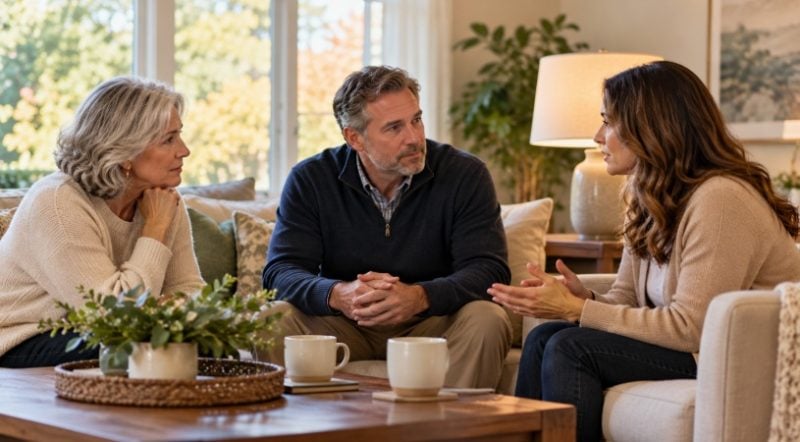
When someone dies, family members may face important decisions while carrying different memories, emotions, and expectations. For those looking into funeral homes in Holland, MI, planning together can make these conversations more manageable. It gives relatives a chance to understand one another’s wishes, share responsibilities, and create a farewell that reflects the person they love. Even when opinions differ, an early conversation can help everyone feel included.
We often hear that the hardest part of making arrangements is not knowing where to begin. At Langeland-Sterenberg Funeral Home, we recognize that families bring different perspectives to the planning process. One person may remember a favorite song, while another recalls a family tradition that deserves a place in the service. Bringing those memories together can help shape thoughtful decisions without expecting everyone to agree immediately.
Why Does Planning Together Help Families Make Decisions?
Planning together gives family members a chance to understand the reasons behind different preferences before finalizing arrangements. Instead of leaving every decision to one person, relatives can share their knowledge of the person being remembered and discuss which choices feel most appropriate.
Consider a family deciding between a traditional funeral and a memorial gathering. One relative may value familiar customs, while another prefers a more informal setting. Neither preference necessarily conflicts with honoring the person who died.
The conversation becomes more productive when everyone explains what matters to them.
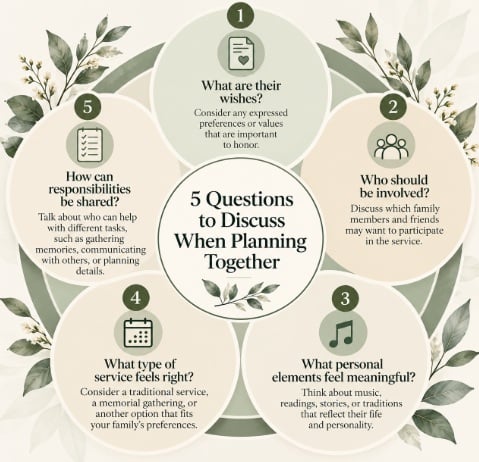
We suggest beginning with a few questions:
- What wishes did our loved one express?
- Which family traditions are especially meaningful?
- Who would like to participate in the service?
- Which decisions need attention first?
These questions create a starting point without turning the discussion into a debate.
Families should also recognize that participation doesn’t mean every relative must make every decision. Some people prefer sharing memories or helping with practical details rather than discussing arrangements extensively.
When responsibilities and expectations are clear, the planning process can feel more organized. Family members know where they can contribute, and fewer details are left to assumption.
How Can Shared Planning Reflect a Loved One’s Personality?
A funeral often becomes more personal when several people contribute memories. Different relatives know different parts of someone’s life, and those perspectives can reveal details that might otherwise be overlooked.
A daughter may remember her father’s favorite music. A childhood friend might recall his sense of humor. A grandchild may associate him with fishing trips or Sunday breakfasts.
Individually, these memories seem small. Together, they offer a fuller picture of the person being honored.
When families discuss ways to reflect a person’s life through a service, they can consider which details belong naturally in the gathering.
For example, a family might select music that was frequently played at home rather than choosing a song simply because it is commonly used at funerals.
Another family may invite several relatives to contribute short memories instead of asking one person to deliver a lengthy tribute.
We encourage families to choose details because they have genuine significance, not because they feel obligated to include them.
It is also helpful to consider the wishes of the person who died. When preferences were expressed beforehand, those wishes can guide the conversation.
Personalization works best when the service feels recognizable to the people who knew the individual, rather than becoming a collection of unrelated ideas.
What Happens When Family Members Disagree?
Disagreements can arise even in close family relationships. People may have different expectations about religious customs, music, the gathering’s location, or how formal the service should be.
These differences do not automatically mean anyone is being unreasonable. Often, relatives are simply focusing on different memories or priorities.
A useful approach is to separate essential preferences from flexible details.
For example, a family may agree to respect a particular tradition but remain open to different ways of incorporating photographs or personal stories.
We can also avoid making every decision during one conversation. When circumstances allow, discussing a few subjects at a time gives relatives room to consider what others have shared.
Listening matters just as much as speaking. Asking why a particular choice is important may reveal a meaningful memory behind the preference.
Families can benefit from understanding how to prepare questions for a funeral director when they need clarification about possible arrangements.
A funeral professional can explain available choices and help organize discussions without deciding what a family should value.
The goal is not to eliminate every difference of opinion. It is to make decisions respectfully while keeping the person’s wishes and the family’s circumstances at the center.
Can Planning Together Make Responsibilities More Manageable?
Funeral arrangements involve many details, from choosing a gathering format to communicating with relatives and selecting meaningful elements for the service.
When one person handles everything, it can be hard to keep track of important tasks, especially during an emotionally demanding time.
Shared planning lets family members contribute based on their abilities, availability, and comfort levels.
One relative might gather photographs. Another could communicate with extended family members. Someone else may help identify readings, music, or people who would like to participate.
These contributions do not need to be equally divided to be valuable.
We recommend identifying one or two people to track decisions and communicate with the funeral home. This helps reduce confusion when several relatives are involved.
It is also important to distinguish between sharing tasks and having authority to make final arrangements. Keep the decision-maker clear, even when many relatives offer input.
A frequently overlooked detail is communication with family members who live elsewhere. They may have memories to contribute or questions about participating.
When practical, include them in conversations to prevent meaningful suggestions from arriving after decisions have already been made.
Why Is Planning Worth Discussing as a Family?
Planning conversations do not have to begin after a death. Families can also discuss funeral preferences in advance, with more time to listen, ask questions, and consider different possibilities.
These conversations may feel unfamiliar at first. However, they can clarify personal wishes and reduce uncertainty about what someone would have wanted.
We might begin by discussing whether a person prefers a traditional service, a memorial gathering, burial, or cremation. Other questions could involve music, meaningful traditions, or people they would like included.
Not every detail needs to be settled immediately.
Some people have clear preferences, while others want to understand the available choices before deciding.
Family members should avoid turning these discussions into pressure. Planning is most useful when the person’s preferences remain central.
It can also help to record important wishes so they don’t depend on someone’s memory of a conversation.
Over time, preferences may change. Revisiting the discussion occasionally allows families to keep their understanding current.
The greatest practical benefit is clarity. When relatives know what matters most to someone, they have a stronger starting point for future decisions.
Making Room for Every Voice
Planning a funeral together can help families share memories, understand different preferences, and organize responsibilities without expecting everyone to approach loss in the same way. The process works best when conversations stay respectful, and the person’s wishes guide key decisions. For families considering funeral homes in Holland, MI, Langeland-Sterenberg Funeral Home can explain available arrangements and guide you through these discussions. Families who want to prepare ahead of time can also start thoughtful conversations about future wishes. We welcome the opportunity to help your family discuss meaningful service choices at a comfortable pace. To speak with our team about planning a funeral together, call (616) 392-2306.
