

Personal Touches That Make Memorials More Meaningful
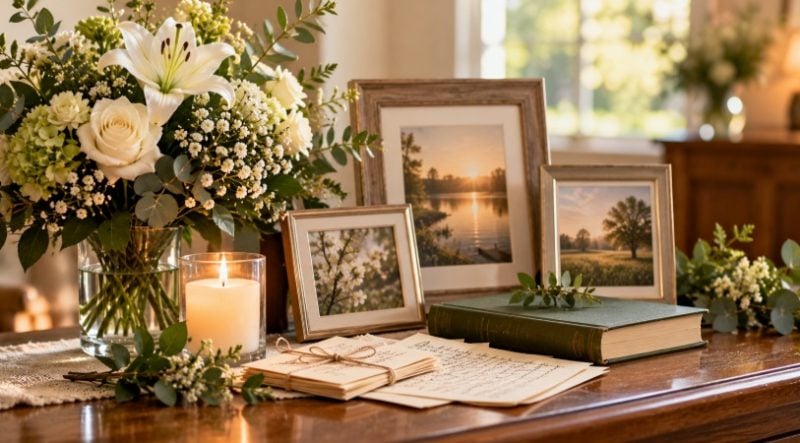
A memorial becomes especially personal when the details reflect the individual being remembered. Families considering cremation services in Hamilton, MI may wish to include favorite music, photographs, meaningful stories, or family traditions in a gathering. These choices can help guests recognize the personality, relationships, and experiences that made someone unique. We believe a thoughtful tribute starts with understanding what mattered to the person, not with a set ceremony format.
Personalization does not require an elaborate event. At Langeland-Sterenberg Funeral Home, we understand that small details often carry deep meaning because they connect directly to familiar memories. A favorite song, handwritten recipe, or photograph from an ordinary family gathering may say more than an elaborate display. By focusing on genuine connections, we can help families consider memorial arrangements that feel comfortable, respectful, and consistent with their wishes.
How Can Personal Details Make a Memorial More Meaningful?
Personal details make a memorial more meaningful by connecting the gathering to the person’s everyday life, relationships, and values. Rather than selecting elements simply because they are traditional, families can consider which memories best represent the individual. The most effective choices often have a clear story behind them.
Begin With Familiar Memories
A useful starting point is to think about what friends and relatives immediately associate with the person. Perhaps they enjoyed gardening, collected postcards, loved a particular song, or prepared the same meal for every family celebration.
These familiar details can inspire readings, music, photographs, and remembrance displays. We might include a favorite poem in the program or arrange photographs around an interest that remained important throughout someone’s life.
Choose Details With a Personal Connection
When deciding what to include, families can ask three simple questions:
- Does this detail reflect something the person genuinely enjoyed or valued?
- Will relatives and friends understand its significance?
- Does it fit the atmosphere the family wants for the gathering?
These questions help keep personalization focused. A memorial does not need to represent every interest or achievement. A few carefully chosen details can communicate a person’s character while allowing guests to remember their own experiences.
Why Do Photographs and Keepsakes Matter?
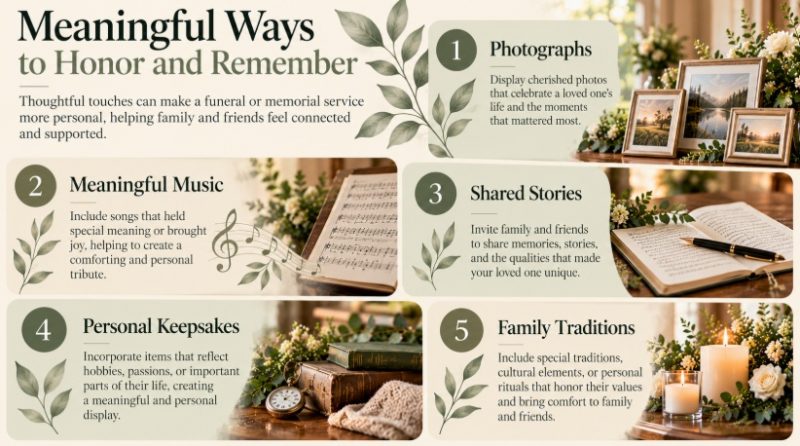
Photographs and keepsakes give guests recognizable reminders of shared experiences. They can represent important milestones, but everyday images are often just as meaningful. A photograph from a backyard gathering, a favorite vacation, or an ordinary afternoon may bring back stories that relatives have not shared in years.
Families can arrange pictures chronologically or group them around relationships, interests, and important moments. A small display might include a wedding photograph, childhood memories, family celebrations, and images of favorite activities.
Personal belongings can provide another connection. A well-used cookbook, gardening gloves, fishing equipment, or a collection of handwritten letters may represent something distinctive about the person’s life.
For families who prefer a lasting collection, gathering photographs and personal stories can preserve memories contributed by relatives and friends.
We recommend considering the practical details before selecting keepsakes. Fragile or irreplaceable belongings may be better represented by photographs. Families should also agree on which items can be displayed and who will care for them afterward.
A thoughtful arrangement gives each object enough space to be appreciated. Guests can then recognize familiar details without feeling overwhelmed by a crowded display.
How Can Music and Stories Reflect a Loved One?
Music and spoken memories can communicate personality in ways that formal descriptions sometimes cannot. A familiar melody may remind guests of family gatherings, road trips, celebrations, or quiet moments spent together. Stories can reveal humor, kindness, interests, and the relationships that shaped someone’s life.
Select Music With Personal Meaning
Families may choose a favorite song, a piece associated with a special occasion, or music connected to a family tradition. Instrumental selections can also provide a gentle background for photographs or reflection.
The most appropriate selection is not necessarily the most solemn. A cheerful song may feel fitting when it reflects the person’s personality and the family’s preferences.
Invite Stories From Different Perspectives
A sibling, friend, neighbor, or grandchild may remember entirely different moments. Inviting several perspectives can create a fuller picture of the person being honored.
Some guests enjoy speaking during a ceremony, while others prefer submitting a written memory. We can make room for both approaches without expecting everyone to participate publicly.
Thoughtful tributes shaped around meaningful relationships can bring these personal elements together in a respectful gathering.
Before the service, families may find it helpful to ask speakers to keep their remarks focused and share their intended length. This simple preparation helps everyone contribute comfortably.
What Small Memorial Touches Are Often Overlooked?
Small memorial details are sometimes overlooked because families concentrate on larger decisions such as the ceremony format, gathering location, and order of events. Yet simple choices can make the experience feel more personal without requiring extensive arrangements.
One idea is to include a favorite saying or meaningful quotation in the printed program. Another is to place a short explanation beside a photograph or keepsake so guests understand why it was selected.
Families might also consider a memory station where visitors can write down a favorite story. Those messages can be collected afterward and shared privately with relatives who could not attend.
Personal touches can extend to the atmosphere of a gathering. A familiar color, seasonal flowers, or music associated with a special memory may help reflect the individual’s preferences.
We should also consider guests who are unable to attend. Sharing selected photographs, written memories, or a memorial program afterward can allow them to participate in remembrance from a distance.
The important distinction is between meaningful details and unnecessary additions. If a choice does not reflect the person or serve the family’s wishes, it does not need to become part of the ceremony.
How Can Families Balance Tradition and Personalization?
Tradition and personalization can work together. Families do not necessarily have to choose between familiar ceremonial practices and individual touches. Music, readings, photographs, and shared memories can often be incorporated into an established service format while respecting personal, family, or faith preferences.
A practical approach is to identify which elements are most important to preserve. These might include a customary reading, a moment of silence, a family gathering, or a particular order of events.
Next, families can consider where personal details would fit naturally. A favorite song might accompany a photographic tribute. A relative could share a short story before a reading. Printed materials might include a photograph and a few words that reflect the person’s character.
Different family members may have different preferences, so it helps to discuss the purpose of each choice rather than assuming everyone will agree immediately.
We encourage families to focus on the overall experience they want to create. A balanced memorial allows traditions to remain meaningful while making room for the individual qualities that deserve recognition.
Creating a Tribute That Feels Personal
A meaningful memorial does not depend on the number of personal details included. What matters is whether the choices reflect the person being remembered and respect the family’s wishes. Photographs, music, stories, keepsakes, and familiar traditions can each contribute something distinctive to a gathering. For families considering cremation services in Hamilton, MI, Langeland-Sterenberg Funeral Home offers guidance in planning respectful, personalized tributes. Families can also consider how familiar gathering spaces and surroundings may influence their arrangements. We welcome conversations about the memories and traditions that matter most to your family. To discuss personal memorial ideas and receive guidance for your arrangements, call (269) 751-2931.
