

Why Military Honors Matter to Many Families
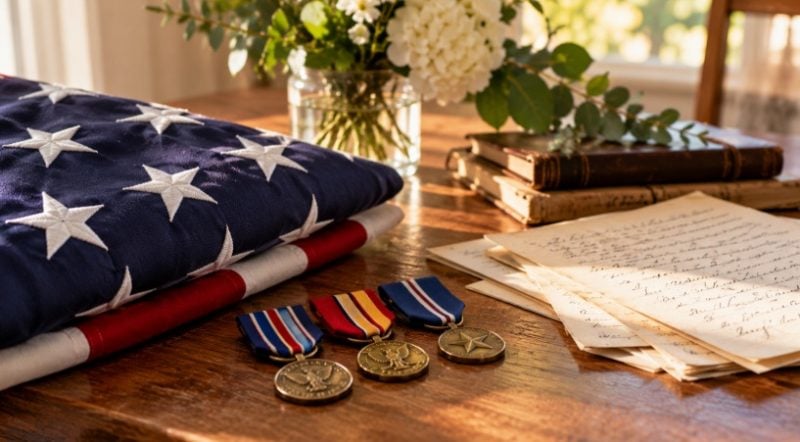
When a family gathers to remember a veteran, the ceremony often carries two stories. One is about military service, commitment, and duty. The other is about the person who came home, raised a family, built friendships, and became part of a community. Families considering funeral homes in Zeeland, MI may wish to bring both stories together through military funeral honors. These traditions offer a respectful way to recognize service while leaving room for the memories that matter most to loved ones.
A military tribute can be deeply personal, even when its ceremonial elements follow established traditions. At Langeland-Sterenberg Funeral Home, we understand that families may have questions about what these honors represent and how they fit into a funeral or memorial gathering. Some veterans spoke often about their service, while others rarely discussed it. Either way, their families deserve the opportunity to understand the traditions available and choose a farewell that respects their wishes.
What Do Military Funeral Honors Represent?
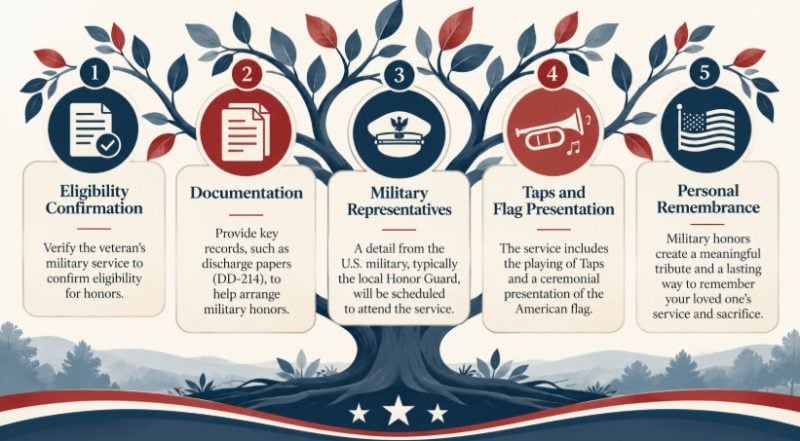
Military funeral honors are ceremonial acknowledgments of a veteran’s service to the United States. For eligible veterans, these honors generally include playing Taps and having uniformed military representatives fold and present the American flag.
The ceremony is brief, but its meaning can be significant. For families, it may represent years of commitment, time spent away from home, friendships formed during service, and responsibilities that shaped a loved one’s life.
The flag presentation is often especially memorable. A family member receives a folded American flag as a formal expression of appreciation for the veteran’s service.
Taps carries its own significance. The familiar bugle call creates a quiet moment for attendees to reflect on the person being honored.
Not every veteran had the same military experience, and families may interpret these traditions differently. We believe the ceremony should honor both the veteran’s service and the family’s feelings.
Understanding what each element represents can help relatives appreciate the tribute without feeling they must respond in any particular way.
Why Is the Flag Presentation So Meaningful?
The American flag has a particular role in military funeral traditions because it formally acknowledges service to the nation. During eligible funeral honors, the flag is folded and presented to the veteran’s family.
For some relatives, that moment brings back memories of uniforms, homecomings, photographs, or stories shared around the dinner table. For others, it may be one of the few occasions when their loved one’s military service is publicly recognized.
The flag can also become a family keepsake. Some families choose to preserve it in a display case alongside photographs or other meaningful items.
We encourage relatives to discuss who should receive the flag before the ceremony whenever possible. Deciding in advance can prevent uncertainty during an already emotional occasion.
Families should also understand that eligibility for military funeral honors and eligibility for particular memorial benefits are not necessarily identical. The appropriate military representatives and agencies determine which honors or items are available.
For those preparing a veteran’s funeral, assistance with military tribute arrangements can help clarify the documentation and coordination involved.
The ceremony’s significance lies not only in the flag itself but also in the life and service it represents.
How Can Families Include Personal Memories?
A veteran’s military service may be an important part of their identity, but it is rarely their entire story. The person being remembered may also have been a devoted parent, a loyal friend, an enthusiastic gardener, or someone whose humor made every family gathering memorable.
Personal details can bring those parts of life into the ceremony.
Remember the Person Behind the Uniform
A photograph from military service might be displayed beside pictures of family celebrations, favorite activities, and ordinary moments at home.
Relatives may share stories about the veteran’s kindness, determination, favorite sayings, or the traditions they passed along.
These memories allow guests to recognize the person beyond their rank or branch of service.
Make Room for Meaningful Traditions
Families might include a favorite reading, meaningful music, or a short tribute from someone who knew the veteran well.
We recommend choosing details that genuinely reflect the individual rather than adding ceremonial elements simply because they seem expected.
A familiar song may carry more personal meaning than an elaborate tribute. A handwritten letter or family photograph can be just as meaningful.
The strongest memorials often acknowledge both public service and private relationships, allowing the veteran’s life to be remembered with warmth and individuality.
What Should Families Know About Arranging Honors?
Families do not need to understand every military tradition before speaking with a funeral director. However, knowing a few practical details can make the conversation easier.
Military funeral honors are generally available to eligible veterans, but eligibility and the specific arrangements must be confirmed. A funeral director can help families understand the request process and coordinate with the appropriate military representatives.
Discharge documentation, commonly a DD Form 214, may be useful when establishing eligibility. Families who cannot immediately locate the paperwork should ask what other steps are available rather than assuming they cannot request honors.
It is also important to discuss timing and location. Military honors may be incorporated into a funeral, memorial, or committal service, depending on the arrangements and available coordination.
Some families expect every military ceremony to include a rifle salute. However, the standard military funeral honors detail does not automatically include one.
A helpful starting point is to ask what honors are available, which documents are needed, and how the ceremony will fit into the overall service.
Families may also appreciate ideas for remembering a veteran’s dedication while considering the personal elements they wish to include.
Can Military Honors Matter Across Generations?
Military honors can hold meaning for relatives who experienced a veteran’s service firsthand and for younger family members who know that history mainly through stories.
A grandchild might recognize the folded flag but not understand why it is presented. Another relative may remember the veteran’s military years through photographs or letters.
These differences create opportunities for families to share memories and explain traditions in age-appropriate ways.
Children may ask why everyone becomes quiet during Taps or why someone receives a flag. Simple explanations can help them understand that the ceremony recognizes a person’s military service.
We can also make room for questions that have no immediate answer. Families may know only part of a veteran’s service history, particularly when the person preferred not to discuss certain experiences.
There is no need to fill those gaps with assumptions.
Preserving photographs, letters, service records, and family stories can help younger generations understand the veteran’s place in their family history.
The most meaningful legacy is not necessarily a complete account of military accomplishments. It may be the connection between a person’s service, their values, and the relationships they built throughout life.
Honoring Service While Remembering a Life
Military funeral honors provide a formal way to recognize service, but families give those traditions personal meaning through memories, relationships, and thoughtful choices. Presenting the flag, playing Taps, and sharing stories during a gathering can acknowledge different parts of a veteran’s life. For families considering funeral homes in Zeeland, MI, Langeland-Sterenberg Funeral Home can help coordinate appropriate arrangements while respecting individual wishes. Families seeking support after the service can also find guidance for caring for one another during loss. If your family is preparing to honor a veteran, call (616) 772-2173 to discuss available military funeral honors and personal tribute arrangements.
